
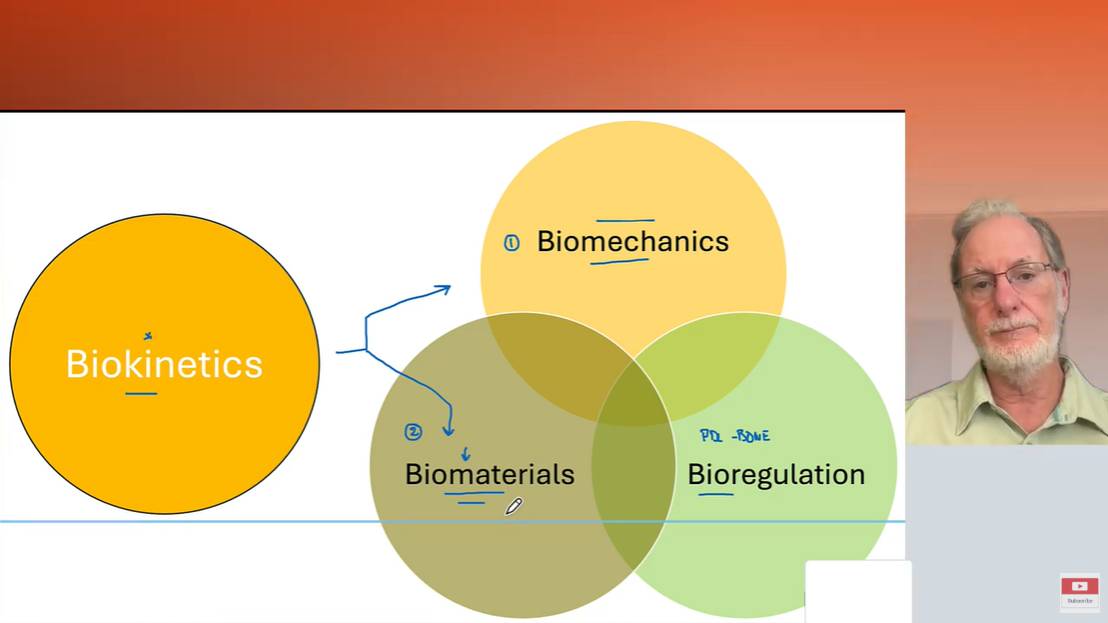
Biokinetics, biology, biomechanics, and biomaterials are tightly interdependent in 3D printed aligner treatment. Biokinetics describes how teeth actually move over time under a given force system—rate, sequence, and efficiency of movement—reflecting the underlying biology of bone remodeling, periodontal ligament response, and each patient’s healing capacity. Biomechanics defines the force and moment systems we intend to deliver (magnitude, direction, point of application, and moment-to-force ratio) to produce controlled tipping, translation, torque, or intrusion. Biomaterials are the bridge between the planned mechanics and the biological response: the viscoelastic, activememory 3D printed resins determine how closely the delivered force field matches the prescription over days and weeks, how much stress relaxation occurs, and how consistently attachments are engaged. Because 3D printed aligners can be engineered with precise geometry, variable thickness, and highly reproducible fit, they offer a more predictable way to align biokinetics (what actually happens) with our biological goals and biomechanical design, compared with traditional thermoformed plastics.
Biokinetics for Aligner Treatment
Share This Story, Choose Your Platform!
About the Author: Jean-Marc Retrouvey

Related Posts

Leave A Comment
You must be logged in to post a comment.