Force Driven vs Displacement Driven Movements-1
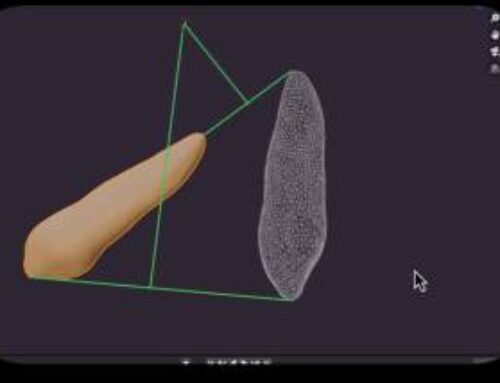
In orthodontics, a force-driven approach starts by prescribing the forces and moments you want at the tooth (e.g., 100–150 g of intrusion, a specific moment-to-force ratio for controlled tipping), and the resulting tooth movement is whatever the biology allows in response to that load. Classic fixed appliances, springs, and loops are essentially force-driven systems. A displacement-driven approach, by contrast, starts with the desired change in tooth position and orientation (for example, 0.25 mm of distalization and 2° of torque per step in an aligner setup); the appliance is then designed to deform to that target, and the forces are whatever the material and geometry generate when you seat it. Conventional thermoformed aligners are mainly displacement-driven, which means clinicians have less direct control over the actual force system and must rely more on staging, attachments, and material properties to keep generated forces within a biologically acceptable range
Share This Story, Choose Your Platform!
About the Author: Jean-Marc Retrouvey


Leave A Comment
You must be logged in to post a comment.